
Are you ready to dive into a bowl of rich and flavorful Slow Cooker Korean Beef Noodles? This dish is a game changer for busy weeknights or cozy weekends. With tender beef, savory sauces, and fresh veggies, it’s a meal everyone will love. I’ll guide you through each simple step to create this delicious dish, so grab your slow cooker and let’s get started!
Why I Love This Recipe
- Flavorful Fusion: This recipe combines the rich flavors of Korean cuisine with comforting noodles, creating a delightful dish that pleases the palate.
- Easy Preparation: With the slow cooker doing all the heavy lifting, this dish is perfect for busy days when you want a delicious meal without much effort.
- Healthy Ingredients: Packed with vegetables like carrots and bell peppers, this recipe is a wholesome option that provides both nutrition and taste.
- Customizable: You can easily adjust the level of spice by modifying the gochujang or add your favorite vegetables to make it your own.
Ingredients
Main Ingredients
– 1.5 lbs beef chuck roast, cut into 1-inch pieces
– 1 cup soy sauce (low sodium recommended)
– 1/4 cup brown sugar
– 1/4 cup gochujang (Korean chili paste)
– 1 tablespoon sesame oil
– 4 cloves garlic, minced
– 1 tablespoon fresh ginger, minced
– 1 cup beef broth
– 2 carrots, sliced thin
– 1 red bell pepper, sliced
– 8 oz rice noodles (or your choice of noodles)
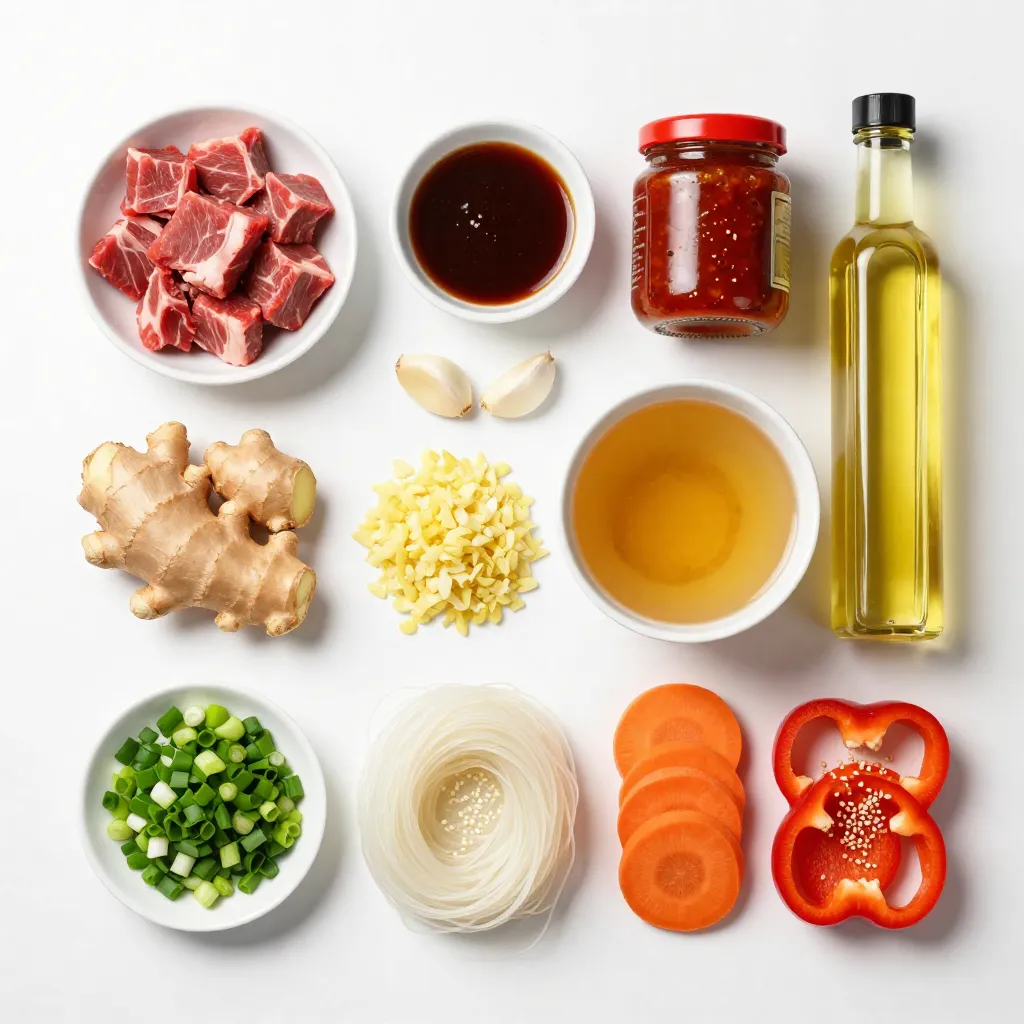
I love using beef chuck roast for this dish. It becomes tender and juicy when slow-cooked. The soy sauce and gochujang add deep, rich flavors. Brown sugar balances the heat with a hint of sweetness. Garlic and ginger give a fragrant kick that makes this dish truly special.
You can add carrots and red bell pepper for color and nutrition. They also add a nice crunch to the meal. For the noodles, I like rice noodles, but you can pick any type you love.
Optional Garnishes
– 2 green onions, chopped (for garnish)
– Sesame seeds (for garnish)
Garnishing with green onions adds freshness. They also give a nice pop of color. Sesame seeds add a nutty flavor and a little crunch. These simple toppings make your dish look and taste amazing.
Kitchen Tools Needed
– Slow cooker
– Mixing bowl
– Cooking utensils
You’ll need a slow cooker to make this dish easy. A mixing bowl helps combine all the marinade ingredients well. Basic cooking utensils like spoons and forks will do the trick. With these tools, you can create a rich and flavorful meal with little effort.
Step-by-Step Instructions
Preparing the Beef Marinade
To start, you need to marinate the beef. In a large bowl, mix together the beef chunks with soy sauce, brown sugar, gochujang, sesame oil, minced garlic, and minced ginger. This mix gives the beef a rich and tasty flavor. Let the beef marinate for at least 30 minutes. For a deeper taste, you can let it sit overnight in the fridge.
Slow Cooking Process
Next, you combine everything in the slow cooker. Add the marinated beef mixture along with beef broth, sliced carrots, and red bell pepper. Stir well to mix all the ingredients. Cover the slow cooker and set it to cook. If you set it on low, let it cook for 6 to 7 hours. If you choose high, it will take about 3 to 4 hours. The beef should be tender when done.
Cooking the Noodles
About 30 minutes before you finish cooking the beef, prepare the rice noodles. Follow the package instructions for cooking them. Once they are cooked, drain the noodles and set them aside. This timing ensures that your noodles are fresh when you serve the dish.
Tips & Tricks
Enhancing Flavor
To make your Slow Cooker Korean Beef Noodles even tastier, try adding more ingredients. Consider adding a splash of rice vinegar for some tang. You can also toss in a few shiitake mushrooms. They add umami and depth. For spiciness, you can adjust the gochujang. Start with less if you prefer milder heat. Always taste as you go to find your perfect balance.
Perfecting Texture
Properly shredding the beef is key. Once your beef is tender, use two forks to gently shred it. This helps keep it juicy. For the sauce, if it seems too thick, add a little beef broth. Stir well until you reach your desired consistency. A smooth sauce makes every bite great.
Presentation Ideas
Serving your dish well makes it more fun. Use deep bowls to hold your noodles and beef mixture. A sprinkle of sesame seeds and chopped green onions on top adds color. You can also place chopsticks beside the bowl for a nice touch. This little detail makes your meal look more inviting.
Pro Tips
- Marinate for Maximum Flavor: Allow the beef to marinate for at least 30 minutes, but preferably overnight. This enhances the flavor and tenderness of the meat.
- Adjust Spice Level: If you prefer a milder dish, reduce the amount of gochujang or add a little sugar to balance the heat.
- Use Fresh Vegetables: For the best texture and flavor, use fresh carrots and bell peppers. You can also add other vegetables like snap peas or bok choy for variety.
- Leftovers Make Great Meals: This dish keeps well in the refrigerator and can be reheated for quick meals throughout the week. Just add a splash of broth to loosen the sauce.
Variations
Different Protein Options
You can easily switch the beef for chicken or pork. Chicken thighs work well because they stay juicy. Cut the chicken into bite-sized pieces. For pork, use a shoulder or loin. Both options absorb the flavors just like beef.
If you prefer a vegetarian dish, try using tofu or tempeh. Cube them and marinate just like the beef. You will get a great texture and flavor. Mushrooms can also add a savory touch. Use shiitake or portobello for a meat-like feel.
Noodle Options
If you need gluten-free noodles, rice noodles are a great choice. They cook quickly and soak up the sauce well. You can also use zucchini noodles for a low-carb option. They add freshness and crunch.
Other noodles to consider are udon or egg noodles. Udon has a chewy texture, while egg noodles add a rich flavor. Choose the type that fits your taste and dietary needs.
Flavor Modifications
You can easily adjust the flavors by adding seasonal vegetables. Try bell peppers, broccoli, or snap peas. These veggies add color and nutrients. Toss them in the slow cooker for the last hour of cooking.
If you want to change the sweetness, add more or less brown sugar. To increase heat, add more gochujang or some red pepper flakes. Taste as you go to find your perfect balance.
Storage Info
Refrigeration
After enjoying your Slow Cooker Korean Beef Noodles, store the leftovers in an airtight container. This keeps them fresh and tasty. You can refrigerate the dish for up to four days. Make sure to let it cool down first before sealing it. This helps prevent moisture build-up inside the container.
Freezing Tips
To freeze leftovers, place them in freezer-safe bags or containers. Remove excess air to prevent freezer burn. You can freeze the noodles and beef mixture together or separately. The dish stays good for up to three months in the freezer. When ready to eat, thaw in the fridge overnight. Reheat in the microwave or on the stove until hot. Add a splash of beef broth if the sauce is too thick.
Meal Prep Suggestions
Prepare ingredients in advance for quick cooking. You can cut the beef, veggies, and even mix the marinade a day before. Store everything in the fridge. On busy days, just combine the marinated beef and veggies in the slow cooker. This saves you time and effort. Enjoy a homemade meal with ease!
FAQs
What can I substitute for gochujang?
If you cannot find gochujang, you can use other options. Sriracha or red chili paste works well. Mix them with a bit of brown sugar for sweetness. You can also use miso paste with a dash of hot sauce. This gives you a similar flavor profile.
Can I cook this recipe in a different appliance?
Yes, you can adapt this recipe. An Instant Pot cooks it faster. Set it to the pressure cook setting for about 40 minutes. You can also make it on the stovetop. Just simmer on low heat for 1.5 to 2 hours. Keep an eye on it to ensure the beef is tender.
How do I know when the beef is done?
Look for the beef to be tender and easy to shred. It should fall apart with a fork. If it is tough, it needs more cooking time. Check the internal temperature; it should reach at least 145°F for safety.
You now have a clear recipe for a delicious slow-cooked beef dish. With the right ingredients, tools, and steps, you can create a meal that impresses. Remember to taste as you go and make adjustments for your liking. Don’t forget the garnishes for flavor and looks! Try different proteins and noodles to keep it fresh. Lastly, safely store any leftovers for future meals. Enjoy your cooking adventure and the tasty results that follo