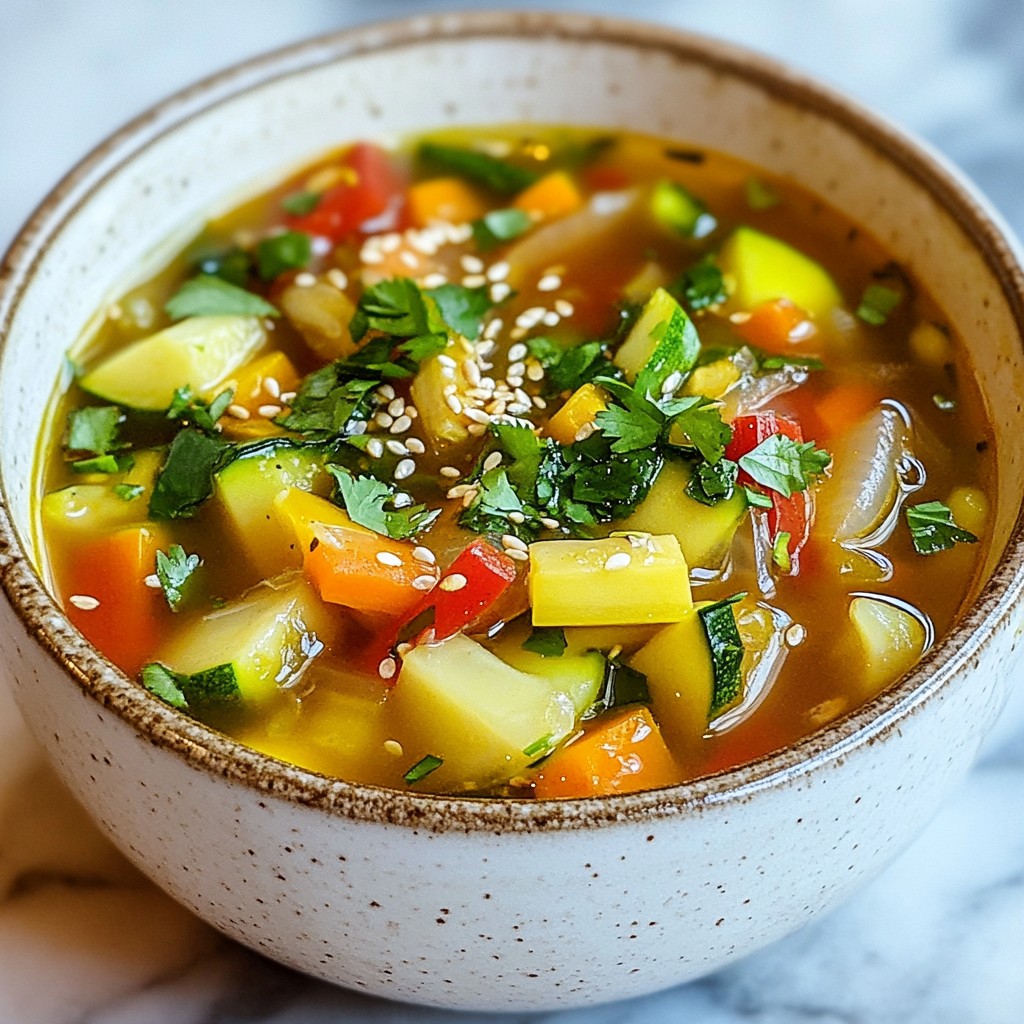
When chilly winds blow, there's nothing like a bowl of Korean Winter Veggie Soup. This hearty dish warms you from the inside out while packing in vibrant veggies and flavors. You can whip it up quickly, making it perfect for busy nights or cozy weekends. Join me as we explore the simple steps and tips to create this comforting bowl that can easily become a family favorite. Let’s dive in!
Why I Love This Recipe
- Comforting Warmth: This soup is the perfect remedy for chilly days, providing warmth and comfort in every spoonful.
- Nutritious & Wholesome: Packed with a variety of vegetables and tofu, this recipe is not only delicious but also super nutritious.
- Flavorful Fusion: The combination of sesame oil, soy sauce, and gochugaru creates a rich, complex flavor that’s truly irresistible.
- Easy to Customize: This recipe allows for flexibility; you can easily swap in your favorite seasonal veggies to make it your own.
Ingredients
List of Ingredients
- 4 cups vegetable broth
- 1 tablespoon sesame oil
- 1 medium onion, diced
- 2 cloves garlic, minced
- 1 cup shiitake mushrooms, sliced
- 1 cup napa cabbage, chopped
- 1 carrot, julienned
- 1 red bell pepper, diced
- 1 zucchini, sliced
- 1 cup firm tofu, cubed
- 2 green onions, chopped
- 1 tablespoon soy sauce
- 1 tablespoon gochugaru (Korean chili flakes)
- Salt and pepper to taste
- Fresh cilantro for garnish
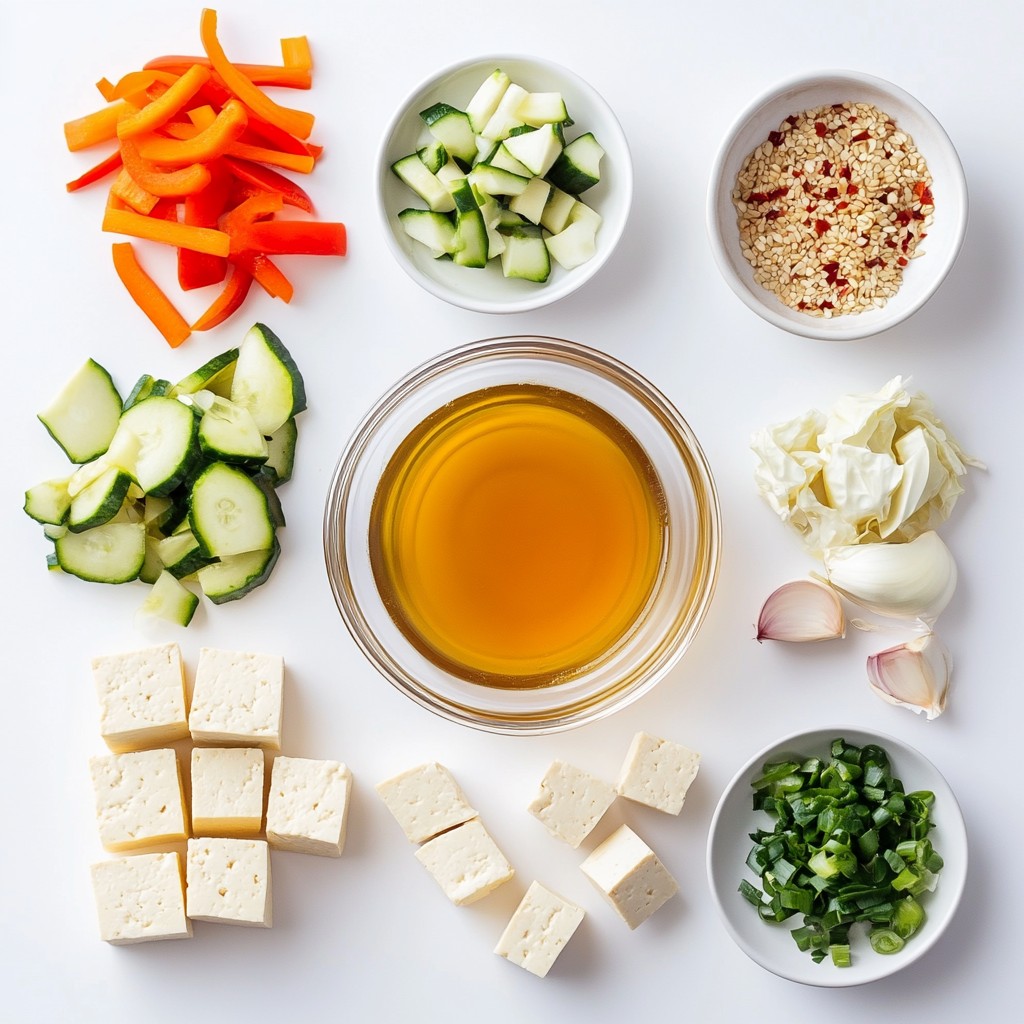
To make Korean Winter Veggie Soup, gather all these fresh and vibrant ingredients. Each one adds a unique flavor and texture to the soup.
First, the vegetable broth serves as the base. It brings warmth and depth. Sesame oil adds a nutty taste that enhances the overall flavor.
Onions and garlic are key aromatics. They build the foundation of flavor. Shiitake mushrooms add umami, while napa cabbage gives a nice crunch. Carrots, red bell pepper, and zucchini offer color and nutrition.
Firm tofu adds protein and creaminess. Green onions bring a fresh bite. Soy sauce and gochugaru add salt and heat. Finally, salt and pepper will balance your dish.
Don't forget cilantro for a fresh touch when serving. Each ingredient works together to create a comforting bowl of soup perfect for winter.
Step-by-Step Instructions
Preparation Steps
1. Heating oil and sautéing aromatics
Start by heating sesame oil in a large pot over medium heat. Add diced onion and minced garlic. Sauté for 3-4 minutes. The onion should turn translucent. This step builds a flavorful base for the soup.
2. Cooking mushrooms and vegetables
Next, stir in sliced shiitake mushrooms. Cook them for 2-3 minutes until they soften. Then add chopped napa cabbage, julienned carrot, diced red bell pepper, and sliced zucchini. Stir everything together and cook for about 5 minutes. The vegetables should begin to soften but still hold their shape.
3. Adding broth and simmering
Pour in 4 cups of vegetable broth. Bring the mixture to a boil. Once it boils, reduce the heat to a simmer. Let it bubble gently for 10-15 minutes. This allows the flavors to meld beautifully.
Final Steps
1. Incorporating tofu and seasonings
Add cubed tofu, chopped green onions, soy sauce, and gochugaru to the pot. Stir well. Let everything simmer together for another 10-15 minutes. This step adds protein and spice to the soup.
2. Adjusting flavors
Taste the soup and season with salt and pepper as needed. Adjust the seasoning to suit your taste. A little tweak can enhance the overall flavor profile.
3. Serving suggestions
Remove the pot from heat. Ladle the soup into deep bowls. Garnish with fresh cilantro for a pop of color. For a full meal, pair the soup with steamed rice. Enjoy the warmth and comfort of this hearty bowl!
Tips & Tricks
Enhancing Flavor
To make your Korean Winter Veggie Soup even better, think about adding more spices. You can use ginger for a warm kick or a bit of turmeric for color and health. Fresh herbs like cilantro or parsley add a nice touch too.
For texture, cook your veggies just right. Let them soften, but not mush. This keeps them crunchy and colorful. Stir gently to avoid breaking the tofu. A splash of lemon juice at the end can brighten up the flavors.
Cooking Techniques
When you sauté, keep the heat at medium. This helps prevent burning. Start with the onion and garlic; they build the base of flavor. Add mushrooms next, as they need a bit longer to cook down.
Cutting your vegetables is key. Use a sharp knife for clean cuts. Aim for even sizes so they cook evenly. Julienne carrots and slice zucchini thinly so they blend well with the soup. This way, every spoonful has a mix of flavors and textures.
Pro Tips
- Use Fresh Ingredients: Fresh vegetables will enhance the flavor and nutrition of your soup. Try to use seasonal produce for the best taste.
- Adjust Spice Levels: If you prefer a milder soup, reduce the amount of gochugaru or omit it entirely. You can always serve it on the side for those who like it spicy!
- Make it Heartier: Add cooked noodles or rice to the soup for a more filling meal. This will turn the soup into a comforting main dish.
- Storage Tips: This soup can be stored in the refrigerator for up to 3 days. Reheat gently on the stovetop and add a splash of broth if it thickens.
Variations
Dietary Adjustments
You can easily make this soup vegan or vegetarian. Just use vegetable broth and omit the tofu if you prefer. For a hearty option, keep the tofu. You can also swap it for tempeh. Tempeh adds protein and a nutty taste.
If you need a gluten-free version, choose gluten-free soy sauce. This keeps the flavor while making the soup safe for you. Check labels to ensure all ingredients are gluten-free.
Ingredient Swaps
Feel free to swap out vegetables based on what you have. Sweet potatoes, spinach, or bok choy work well too. Each choice adds a new flavor and texture.
You can change the protein, too. If you want meat, chicken works great. Dice it and cook it with the onions and garlic. It will add a rich taste to the soup. For a different taste, use shrimp or even a mix of beans. Each option gives a unique twist to the dish.
Storage Info
Storing Leftovers
To keep your Korean Winter Veggie Soup fresh, store it in the fridge. Use an airtight container for best results. This soup stays good for about three to four days. Let it cool down before you seal it up. If you want to keep it longer, freezing is a great option.
To freeze the soup, pour it into freezer-safe bags or containers. Leave some space at the top for expansion. This soup can last up to three months in the freezer. When you are ready to enjoy it, just thaw it in the fridge overnight.
Reheating Instructions
When you reheat the soup, do it gently. Use a pot on low heat. This helps keep the veggies tasty and not mushy. Stir it often to heat evenly. If the soup seems too thick, add a splash of broth or water.
You can also reheat it in the microwave. Place it in a microwave-safe bowl and cover it. Heat it in short bursts, stirring in between. This way, you keep the flavor and texture just right.
FAQs
Common Questions
What is Korean Winter Veggie Soup traditionally served with? Korean Winter Veggie Soup usually pairs well with steamed rice. You can also enjoy it with kimchi for extra flavor. This combo brings warmth and comfort.
Can I make this soup in advance? Yes, you can make this soup ahead of time. It keeps well in the fridge for about three days. Just store it in an airtight container. When ready to eat, reheat it on the stove or in the microwave.
How do I enhance the nutritional value of the soup? To boost nutrition, add extra vegetables like spinach or broccoli. You can also include beans for protein. This makes the soup heartier and full of vitamins.
Cooking Related Inquiries
What spices can elevate the flavor profile? You can add ginger for warmth and depth. A touch of black pepper enhances the taste too. If you want a kick, try adding more gochugaru or even some sesame seeds.
How can I adjust the spiciness of the soup? To change the spice level, add less gochugaru if you prefer it milder. For more heat, add extra gochugaru or a splash of hot sauce. Adjust to your taste for the perfect bowl.
This blog post explored the delicious ingredients and steps to create Korean Winter Veggie Soup. We started with fresh vegetables and rich broth, then sautéed aromatics for a flavorful base. Tips for enhancing flavor and variations allow for personal touches. Proper storage methods make it easy to enjoy later.
Remember, cooking should be fun and adaptable. Use what you love and enjoy sharing this meal with others. Dive into this tasty soup and make it your own!