Looking for a meal that's both hearty and nourishing? Welcome to the world of creamy vegetable soup! This dish is packed with rich flavors and comforting textures. As you explore this recipe, you'll discover simple ingredients that cater to your taste. I'll guide you through easy steps, tips, and variations to personalize your soup. Let’s dive in and create a comforting bowl that warms your soul!
Why I Love This Recipe
- Healthy and Nutritious: This soup is packed with a variety of vegetables, making it a wholesome choice for a comforting meal.
- Creamy Texture: The addition of coconut milk gives the soup a rich, creamy texture without dairy, perfect for those who are lactose intolerant.
- Customizable Ingredients: You can easily swap in your favorite vegetables or whatever you have on hand, making it a versatile recipe.
- Quick and Easy: This recipe takes just 35 minutes from start to finish, making it perfect for a weeknight dinner.
Ingredients
List of Ingredients
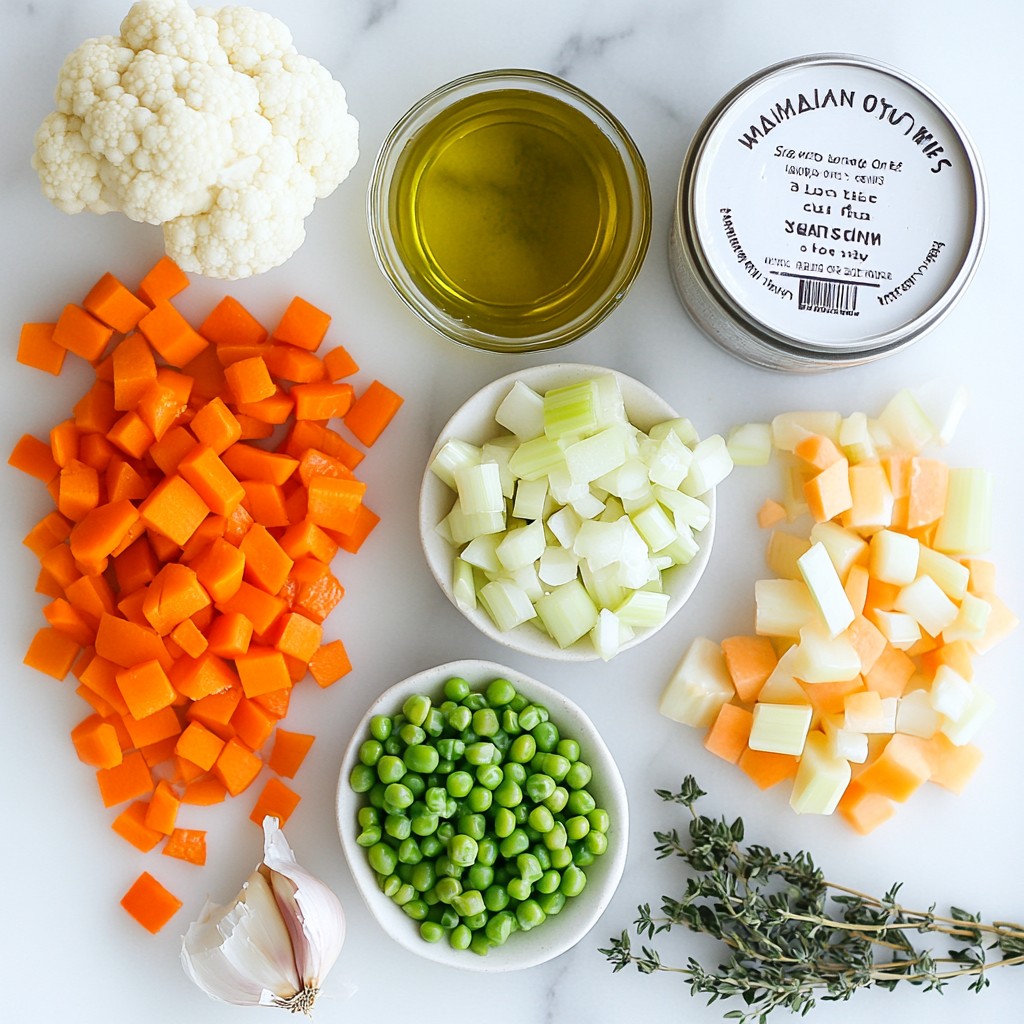
To make this creamy vegetable soup, gather the following items:
- 1 tablespoon olive oil
- 1 medium onion, chopped
- 2 cloves garlic, minced
- 2 carrots, diced
- 2 celery stalks, diced
- 1 medium zucchini, diced
- 1 cup cauliflower florets
- 1 cup green peas (fresh or frozen)
- 4 cups vegetable broth
- 1 cup coconut milk
- 1 teaspoon dried thyme
- 1 teaspoon dried basil
- Salt and pepper to taste
- Fresh parsley, chopped (for garnish)
Measurements and Substitutions
When you cook, precise measurements can matter. Here are some tips:
- Use a large onion for strong flavor or a small one for milder taste.
- Swap garlic with garlic powder if you prefer.
- You can replace carrots with parsnips or sweet potatoes for a different taste.
- Any broth works, but vegetable broth gives the best flavor.
- Swap coconut milk with heavy cream for a richer soup.
Fresh vs. Frozen Ingredients
Using fresh ingredients can enhance the soup’s taste. Fresh veggies have crispness and bright flavors. Frozen vegetables are handy and can work well too. They save time and still provide good taste. Just remember to thaw them first for even cooking. If you use frozen peas, they can go straight into the pot. Each option has its perks, so choose what suits you best!
Step-by-Step Instructions
Preparing the Vegetables
Start by gathering your fresh vegetables. You will need:
- 1 tablespoon olive oil
- 1 medium onion, chopped
- 2 cloves garlic, minced
- 2 carrots, diced
- 2 celery stalks, diced
- 1 medium zucchini, diced
- 1 cup cauliflower florets
- 1 cup green peas (fresh or frozen)
Chop the onion into small pieces. Dice the carrots and celery into small cubes. Cut the zucchini into small chunks. Break the cauliflower into florets. This helps them cook evenly.
Cooking Process
In a large pot, heat the olive oil over medium heat. Add the onion and sauté until it turns clear, about 5 minutes. Then, toss in the minced garlic. Sauté for one more minute. This helps to release the garlic's flavor.
Next, add the diced carrots and celery. Cook them for about 5 minutes. Stir them often to avoid burning. Then, stir in the zucchini and cauliflower. Cook for 3 more minutes.
Now, pour in 4 cups of vegetable broth. Add the green peas, dried thyme, and dried basil. Bring the soup to a boil. Once it boils, lower the heat and let it simmer for 15 to 20 minutes. The veggies should be soft by now.
Blending and Finalizing the Soup
Once the vegetables are tender, it's time to blend the soup. You can use an immersion blender directly in the pot. If you don’t have one, carefully move the soup to a regular blender in batches. Blend until smooth.
After blending, stir in 1 cup of coconut milk. This adds a creamy touch. Season with salt and pepper to taste. Let it simmer for another 5 minutes to warm through.
Finally, serve the soup hot. Garnish with fresh chopped parsley on top. Enjoy this hearty and nourishing dish that warms the soul!
Tips & Tricks
Best Techniques for Flavor Enhancement
To boost flavor in creamy vegetable soup, start with fresh ingredients. Fresh veggies taste better than frozen. Sauté the onions and garlic well to release oils. This step brings out natural sweetness and depth. Use good vegetable broth for a rich base. You can add a splash of lemon juice for brightness. A sprinkle of smoked paprika or a dash of hot sauce can add warmth. Don't forget to taste as you cook. Adjust salt and pepper to your preference.
Serving Suggestions
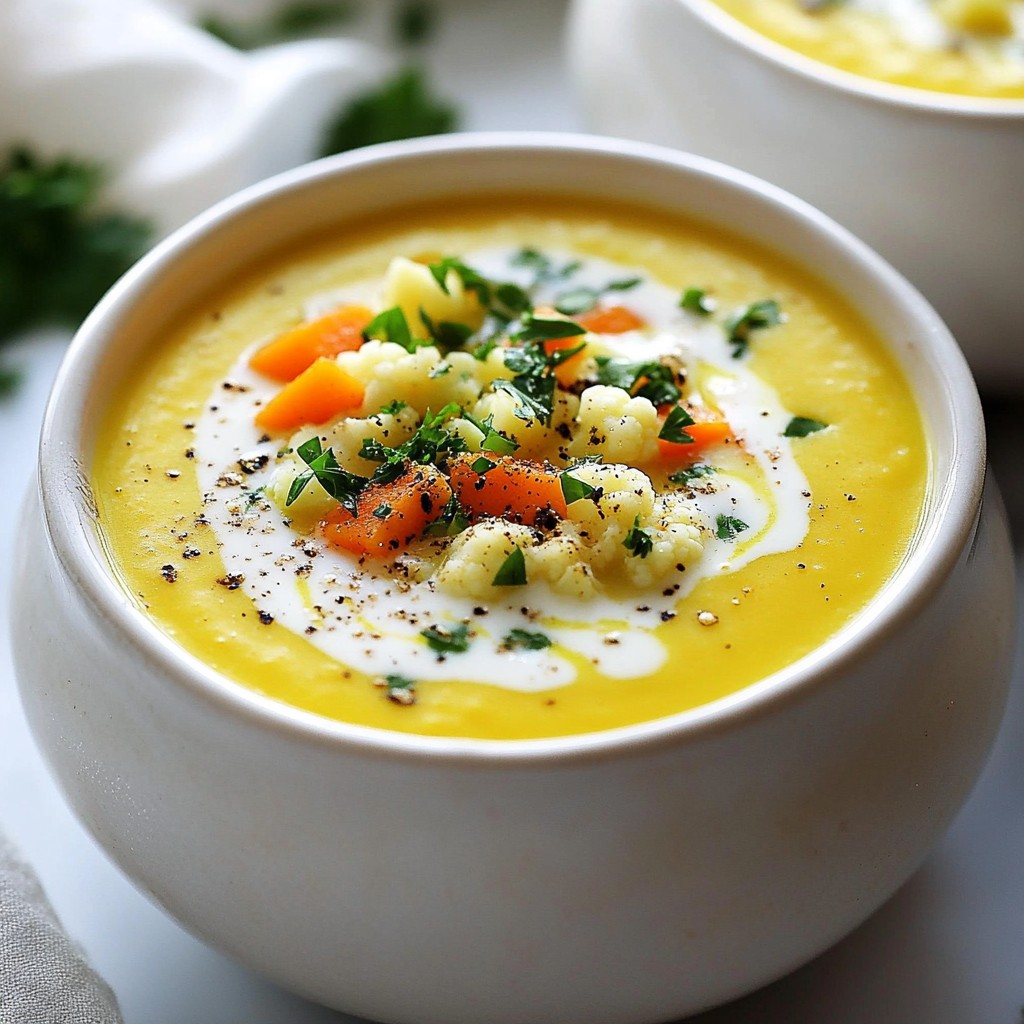
Serve your soup in beautiful bowls. A drizzle of coconut milk on top looks pretty. Garnish with fresh parsley for color. Pair it with crusty bread or a side salad. You can also add croutons for crunch. This makes your meal satisfying and fun. If you want to impress, serve with a sprinkle of cheese or seeds on top.
Common Mistakes to Avoid
One common mistake is overcooking the vegetables. They should be tender but still colorful. Don’t skip the blending step; it makes the soup creamy. If your soup is too thick, add more broth or water. Another mistake is not tasting while cooking. Always check for seasoning. Lastly, don’t forget the garnishes. They add flavor and make the dish pop. Avoid these pitfalls for a perfect bowl of soup!
Pro Tips
- Freshness Matters: Use the freshest vegetables you can find for the best flavor and nutrition in your soup.
- Texture Control: If you prefer a chunkier soup, reserve some of the vegetables before blending and stir them back in afterward.
- Spice It Up: Feel free to add a pinch of red pepper flakes or a dash of hot sauce for a little heat.
- Storage Tips: This soup stores well in the refrigerator for up to 4 days, and it freezes beautifully for up to 3 months.
Variations
Different Vegetable Combinations
You can change the veggies in your soup to suit your taste. Try using sweet potatoes, bell peppers, or even spinach. Each veggie adds its own flavor and texture. If you want a bolder taste, add mushrooms or kale. Mix and match to find your favorite combo.
Adding Protein Options
For a heartier soup, consider adding protein. You can stir in cooked lentils or beans. Chickpeas work great too. If you eat meat, shredded chicken or diced turkey can be tasty choices. Just make sure to add them during the simmering stage so they heat through.
Spice and Herb Substitutes
You can play with spices and herbs to change the soup's flavor. If you don’t have thyme or basil, try oregano or rosemary. A pinch of cumin can add warmth. For a kick, consider adding red pepper flakes. Adjust the herbs based on what you enjoy most.
Storage Info
How to Store Leftover Soup
To store leftover soup, let it cool first. Use an airtight container for best results. You can keep the soup in the fridge for up to four days. Always label the container with the date. This way, you won’t forget when you made it.
Reheating Instructions
When you’re ready to enjoy the soup again, heat it on the stove. Pour the soup into a pot over low heat. Stir often to avoid burning. If it seems thick, add a bit of water or broth. You can also use a microwave. Place the soup in a microwave-safe bowl and cover it. Heat for one to two minutes, stirring halfway through.
Freezing for Future Meals
Freezing is a great option for long-term storage. Pour the cooled soup into freezer-safe bags. Make sure to leave some space for expansion. Seal the bags tightly to prevent air from getting in. Label each bag with the date. The soup can stay fresh in the freezer for up to three months. When you’re ready to eat, thaw it in the fridge overnight. Then, reheat it as described above.
FAQs
Can I make this soup ahead of time?
Yes, you can make this soup ahead of time. It stores well in the fridge. Just let it cool and put it in an airtight container. It can last about 3 to 5 days. When you're ready to eat, just reheat it on the stove or in the microwave. The flavors will deepen, making it even better.
How can I thicken the soup?
If you want a thicker soup, you have a few options. You can blend it longer to make it creamier. Adding more vegetables can also help. Try adding a potato or some extra carrots. You can also mix in a bit of cornstarch with water. This will give it a nice, thick texture.
Is the soup vegan-friendly?
Yes, this soup is vegan-friendly. All the ingredients are plant-based. You use vegetable broth and coconut milk, which are both vegan. This makes the soup rich and tasty without any animal products. It’s perfect for anyone looking for a hearty, plant-based meal.
This blog post covered all the key elements to making a great soup. We explored the ingredients and their measurements. I shared tips for cooking and blending the soup perfectly. You learned how to enhance the flavor and avoid common mistakes. We also discussed how to store, reheat, and even freeze your soup. Feel confident to create delicious variations. Remember, making soup can be simple and fun. Enjoy every bowl you make!