
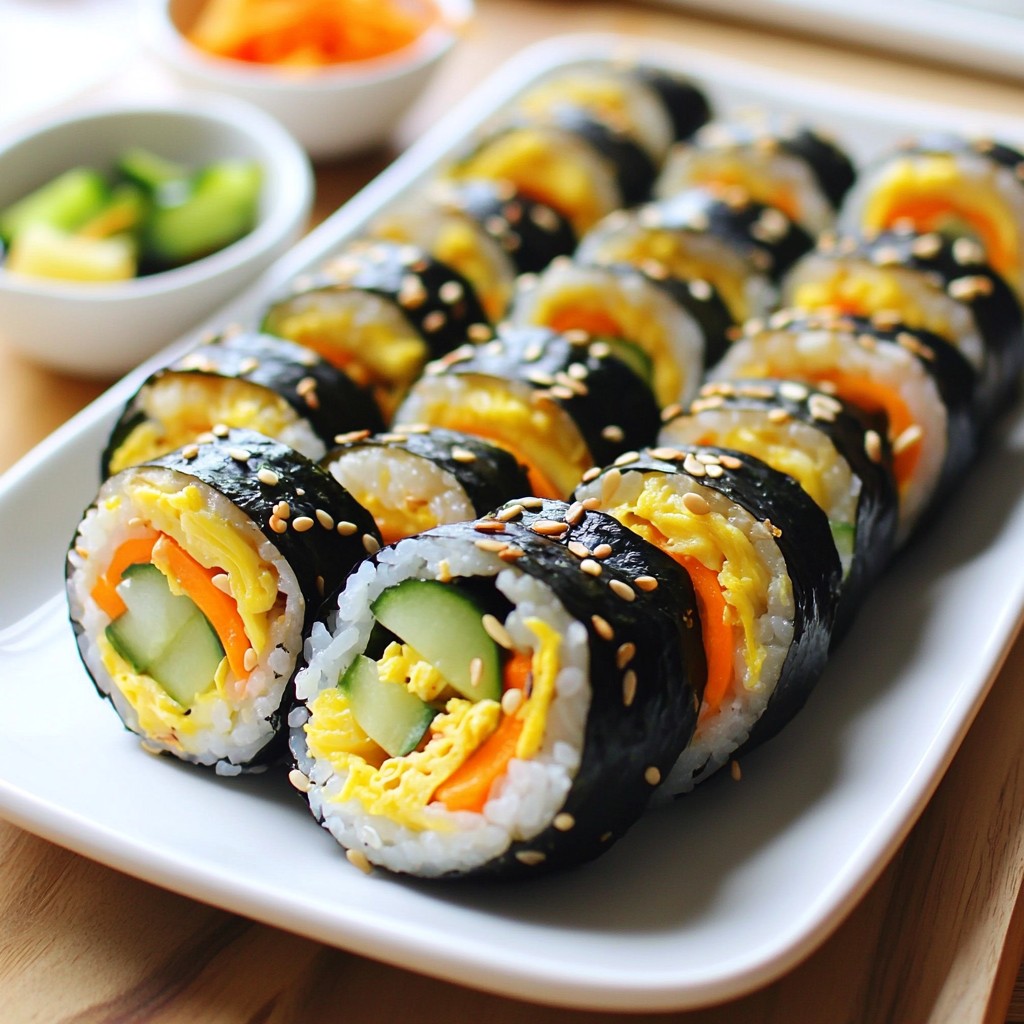
If you're craving a fun and tasty meal, classic kimbap rolls are the answer. This simple recipe bursts with flavor and colorful ingredients that will excite your taste buds. I'll guide you through each step, from preparing the perfect short-grain rice to rolling all those fresh veggies. Whether you're a beginner or a pro, you'll find it easy to make kimbap that impresses everyone at the table. Let's roll!
Why I Love This Recipe
- Deliciously Versatile: Kimbap can be customized with various fillings, making it a perfect dish for any preference or occasion.
- Easy to Make: The step-by-step instructions simplify the rolling process, making it accessible for both beginners and experienced cooks.
- Healthy Ingredients: Packed with fresh vegetables and wholesome rice, kimbap is a nutritious meal option that doesn't compromise on flavor.
- Great for Sharing: Kimbap is perfect for gatherings or picnics, allowing everyone to enjoy bite-sized pieces of this delightful dish.
Ingredients
Essential Ingredients for Classic Kimbap Rolls
- 2 cups short-grain rice, rinsed
- 2 1/2 cups water
- 2 tablespoons sesame oil
- 1 tablespoon soy sauce
- 6 sheets of nori (seaweed)
- 1 medium cucumber, julienned
- 2 medium carrots, julienned
- 4 large eggs, beaten and cooked into thin omelets, sliced into strips
- 5-6 ounces pickled radish (danmuji), sliced into strips
- Salt to taste
- Sesame seeds for garnish
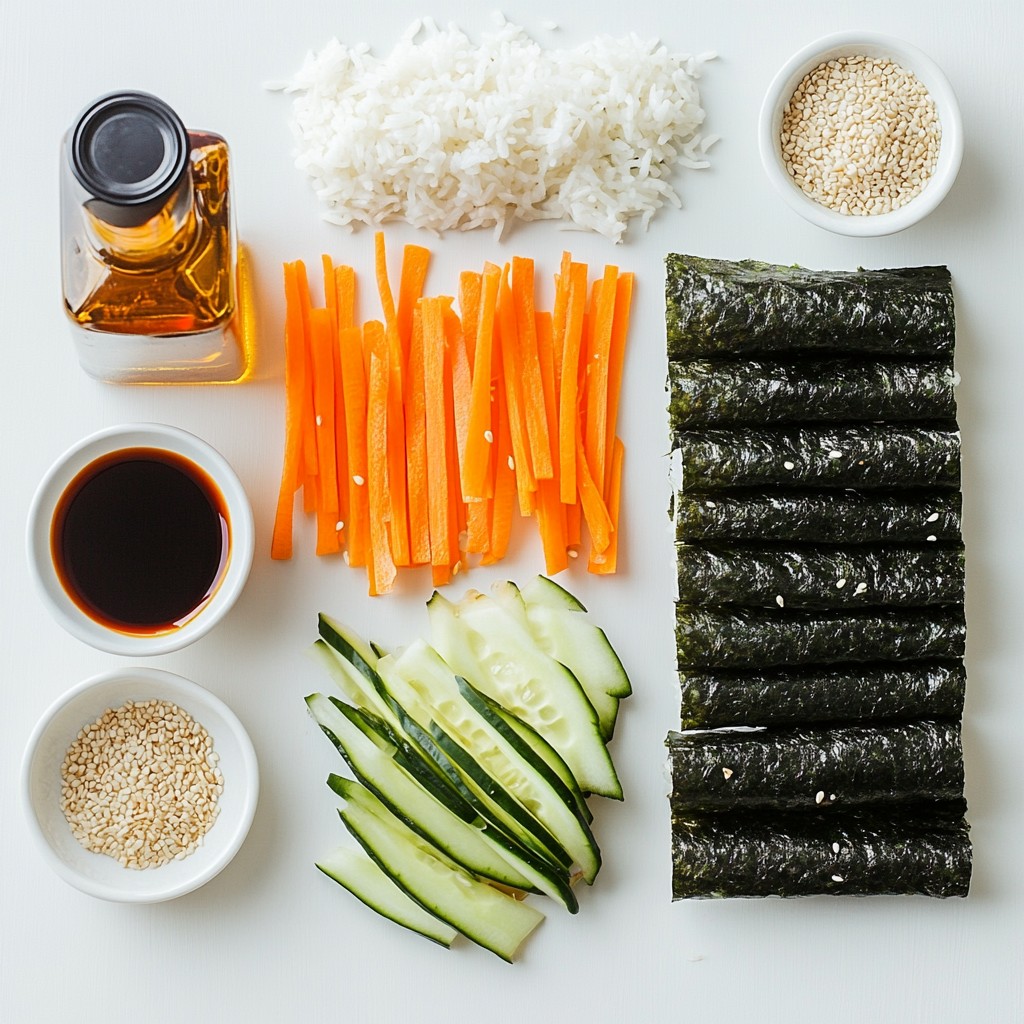
To make classic kimbap rolls, you need the right ingredients. Short-grain rice is key. It sticks well and gives a nice bite. Rinse it before cooking to remove excess starch. Nori sheets, or seaweed, wrap around the rice and fillings. They add flavor and texture.
Fresh vegetables make kimbap colorful and crunchy. Use cucumber and carrots, cut into thin strips. Eggs provide protein and richness. Beat and cook them into thin omelets, then slice them. Pickled radish adds a sweet and tangy taste. You can season the rice with sesame oil and soy sauce. A pinch of salt is optional.
Optional Ingredients for Flavor Enhancement
- Salt to taste
- Sesame seeds for garnish
- Additional fillings (see Variations section)
You can add more flavor to your kimbap. A little salt can enhance the taste of the rice. Sesame seeds make a great garnish. They add a nutty crunch. If you want to try different fillings, look into the variations section. You can mix things up with proteins or other veggies.
Step-by-Step Instructions
Cooking the Rice
First, rinse the rice until the water runs clear. This helps remove excess starch. Then, add the rinsed rice and water to a medium pot. Bring it to a boil over high heat. After boiling, cover the pot and reduce the heat to low. Let it cook for about 20 minutes. The water should absorb and the rice should be tender. Once done, let the rice cool slightly in a bowl.
Preparing the Fillings
While the rice cools, prepare the fillings. Start by julienning the cucumber and carrots. This means cutting them into thin, matchstick shapes. Next, sauté the carrots in a pan with a little oil. Cook them for about 3-4 minutes. They should become slightly soft but still crunchy. For the eggs, beat them in a bowl and cook in a separate pan. Make a thin omelet, then slice it into strips.
Assembling and Rolling the Kimbap
Now, it's time to assemble. Place a sheet of nori on a bamboo sushi mat or a clean surface. With wet hands, grab a handful of rice. Spread the rice evenly over the nori, leaving about an inch at the top edge. In the center of the rice, place strips of cucumber, sautéed carrots, egg strips, and pickled radish.
To roll the kimbap, start at the edge closest to you. Roll the mat away from you while applying gentle pressure. Keep everything tight as you roll. Roll until you reach the uncovered edge of the nori. Seal the edge with a bit of water to hold it together.
Slicing and Serving
To slice the kimbap, use a sharp knife. Cut it into bite-sized pieces, about an inch thick. After each cut, wipe the knife with a damp cloth. This keeps the slices clean. For serving, arrange the kimbap on a platter. Sprinkle sesame seeds on top for garnish.
You can serve the kimbap with a side of pickled vegetables and soy sauce for dipping. Use colorful plates for added flair, and garnish with fresh greens for a lovely touch.
Tips & Tricks
Perfect Rice Consistency
Using short-grain rice is key for kimbap. This rice is sticky, which helps the rolls hold together. To get the right texture, rinse the rice until the water runs clear. This removes extra starch. Cook the rice with the right water ratio: 2.5 cups of water for every 2 cups of rice. Let it rest after cooking. This step helps the rice to firm up.
Rolling Techniques
To maintain tight rolls, be sure to use a bamboo mat. Wet your hands before handling the rice. This keeps it from sticking. Spread the rice evenly, leaving space at the top edge. When rolling, start from the edge closest to you. Apply gentle pressure as you roll. Avoid rolling too tightly, or the fillings might spill out. Seal the edge with a bit of water.
Presentation Tips
For a stunning presentation, slice the kimbap into even pieces. Arrange them on a colorful plate. Garnish with sesame seeds for a nice touch. Serve with pickled vegetables on the side. A small bowl of soy sauce makes a great dip. These additions make your kimbap look as good as it tastes.
Pro Tips
- Use the Right Rice: For the best texture, always use short-grain rice as it becomes sticky and holds together well when rolled.
- Keep Your Hands Wet: Wetting your hands while handling the rice prevents it from sticking to your fingers, making the rolling process easier.
- Fresh Ingredients Matter: Use fresh vegetables and high-quality nori for the best flavor and presentation in your kimbap.
- Experiment with Fillings: Feel free to customize your kimbap with different ingredients like cooked meats, tofu, or other veggies to suit your taste.
Variations
Popular Kimbap Fillings
For kimbap, you can mix and match fillings. Here are some great options:
- Protein options: You can use beef, tuna, or tofu. Each adds a different flavor.
- Other vegetable ideas: Try spinach or burdock root for extra crunch and nutrition. These vegetables bring freshness and color to your rolls.
Creative Flavor Twists
To make your kimbap unique, you can add special sauces or spices. A drizzle of gochujang can add heat. Or, try a touch of sesame sauce for a nutty flavor. Fusion kimbap ideas are fun! For example, use Italian pesto for an Italian twist. You can even add hummus for a Middle Eastern flair. Don't be afraid to experiment with your favorite tastes!
Storage Info
How to Store Leftover Kimbap
To keep your kimbap fresh, wrap it tightly in plastic wrap. This trick helps seal in moisture. Use an airtight container for added protection. You can store kimbap in the fridge for up to three days. If you leave it out at room temperature, it’s best to eat it within two hours.
Reheating Guidance
You can reheat kimbap, but it’s not the best idea. Reheating can change its texture. If you must, use a microwave. Heat it for about 10-15 seconds. This warms it without making it too soggy. Enjoy your kimbap cold for the best taste and texture!
FAQs
What is the difference between kimbap and sushi?
Kimbap and sushi are both rice rolls, but they have key differences.
- Rice: Kimbap uses short-grain rice, while sushi often uses seasoned rice.
- Fillings: Kimbap has cooked or pickled ingredients, like vegetables and eggs. Sushi often has raw fish or seafood.
- Flavoring: Kimbap is usually flavored with sesame oil and soy sauce. Sushi rice is seasoned with vinegar, sugar, and salt.
- Serving Style: Kimbap is often sliced into bite-sized pieces for picnics. Sushi may be served as whole rolls or nigiri.
Can I make kimbap vegetarian or vegan?
Yes, kimbap can be made vegetarian or vegan with a few easy swaps.
- Fillings: Use vegetables like spinach, avocado, or bell peppers.
- Protein: Replace eggs with tofu or chickpeas for extra protein.
- Pickled Items: Use a variety of pickled vegetables for added flavor.
- Rice: Ensure the rice is cooked without animal products.
This way, you can enjoy kimbap while keeping it plant-based.
How long does kimbap last in the fridge?
Kimbap lasts about 1 to 2 days in the fridge.
- Storage: Wrap each roll in plastic wrap to keep it fresh.
- Quality: The rice may get hard and the vegetables can lose crunch.
For best taste and texture, eat kimbap fresh. If you have leftovers, enjoy them within a couple of days.
Kimbap is a fun dish that you can easily make at home. We covered essential ingredients like rice and nori, plus optional items to boost flavor. You learned step-by-step how to cook, assemble, slice, and serve kimbap beautifully. With tips on rolling and storage, you can enjoy this treat anytime. Finally, exploring variations allows you to personalize your kimbap. Dive in, try new flavors, and impress others with your skills!